
The Neurobiology of Belief: Why Alia Crum's Research Matters
19 min read
In 2007, a group of Italian researchers led by Dr. Fabrizio Benedetti performed what seemed like a simple experiment. They gave morphine to patients recovering from thoracic surgery. Half received the painkiller from a doctor at their bedside. The other half received the identical dose through a pre-programmed IV pump, unaware they were receiving medication. The first group reported significant pain relief. The second group, despite receiving the same pharmaceutical intervention, experienced minimal benefit.
This wasn't an anomaly. When Benedetti's team repeated the protocol with treatments for anxiety, Parkinson's disease, and hypertension, the pattern held. Awareness of treatment determined effectiveness. The drug's chemical properties remained constant. What varied was the patient's mindset about receiving treatment, and that variation reshaped biological reality.
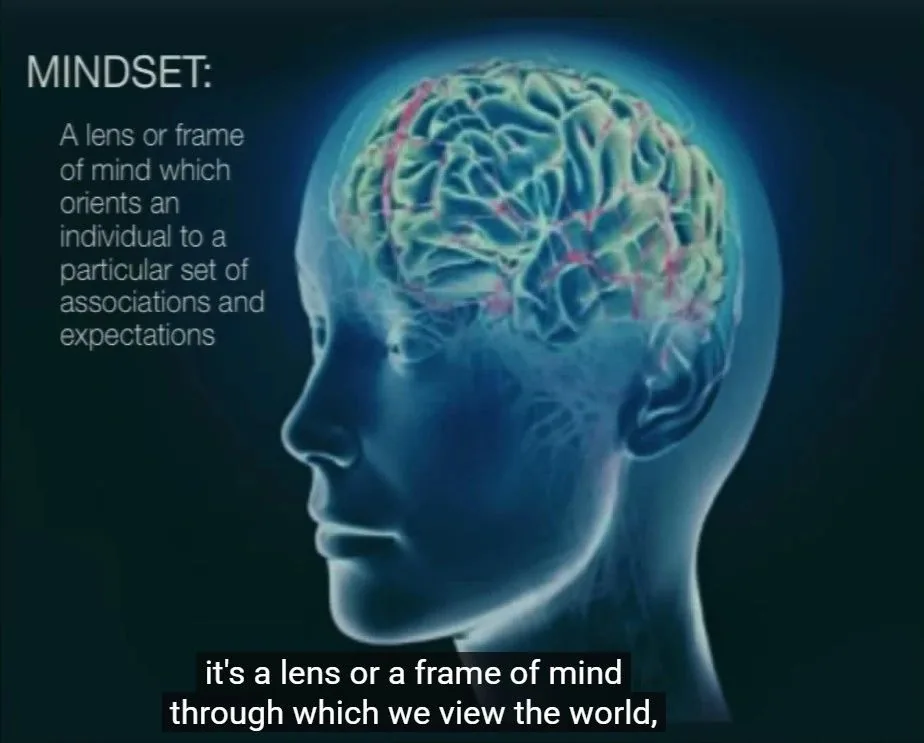
Alia Crum's TED talk (opens in a new tab) on mindsets presents this research not as an interesting oddity but as a fundamental challenge to how we understand human physiology. More importantly for those of us in education, her work provides empirical validation for something philosophers and contemplatives have long understood: beliefs don't just filter reality, they construct it. And if beliefs construct reality with enough force to alter morphine effectiveness, ghrelin secretion, and health outcomes, then understanding belief systems isn't a nice addition to education. It's the foundation.
When the Matrix Becomes Measurable
In my previous writing on beliefs, I explored how belief systems function as the operating code of consciousness, largely running beneath awareness, determining what we perceive, how we interpret, and who we become. Crum's research takes this framework from philosophical speculation to biological measurement. She shows us people literally living in different physiological realities based solely on their beliefs.
Consider her milkshake study. Participants drank what they believed was either a 140-calorie "sensible" shake or a 620-calorie "indulgent" shake. Blood tests measured ghrelin, the hunger hormone that rises when we need food and drops when we've eaten. After the "indulgent" shake, ghrelin levels dropped three times more than after the "sensible" shake. This makes perfect metabolic sense until you learn the critical detail: both shakes were identical. Same calories, same nutrients, same everything. The only difference was belief.
The participants' bodies responded not to objective reality (what was actually in the shake) but to believed reality (what they thought was in the shake). The digestive system, supposedly one of our most automatic and unconscious biological processes, was taking orders from the mind's interpretation of the situation. The hormone response was real. The metabolic signaling was real. But it was generated by belief, not by the food itself.
This is living in the Matrix made literal. Same input, radically different biological output, mediated entirely by the belief system through which that input was processed. The person convinced they consumed 620 calories created a 620-calorie hormonal response. The person convinced they consumed 140 calories created a 140-calorie hormonal response. Both were wrong about the facts, but their bodies didn't care about facts. Their bodies cared about beliefs.
The implications are staggering. If belief can override caloric content in determining hormonal response, what else can belief override? If the mind can tell the endocrine system what to do regardless of objective circumstances, then the boundary between psychology and physiology dissolves. We aren't bodies that have minds. We're bodymind systems where belief serves as the executive function, interpreting data and issuing instructions that cascade through every system.
Exercise You Can't See
Perhaps even more striking is Crum's hotel housekeeper study, which perfectly illustrates what I described as the prison without walls. These women were performing extraordinary physical labor. By objective measurement, their work exceeded the Surgeon General's requirements for daily exercise. They were on their feet all day, using diverse muscle groups, burning significant calories. But when asked if they exercised regularly, two-thirds said no. A third said they got zero exercise.
They couldn't see the prison walls because there were no prison walls. They were free to receive the benefits of their physical activity. Nothing prevented this except a single belief: "My work is not exercise." That belief alone was enough to block the cascade of positive health effects that should have followed from their activity.
Crum gave half of these women a 15-minute presentation. She showed them a poster explaining that their work satisfied exercise requirements. She told them they should expect to receive health benefits. That's it. Fifteen minutes. One conversation. Four weeks later, those who received the presentation had lost weight, reduced blood pressure, decreased body fat, and reported greater job satisfaction. The control group, doing identical work, showed no changes.
No behavior change occurred. The women didn't work harder. They didn't join gyms. They didn't modify their diets. The only thing that changed was their belief about what their work meant. That single belief shift recruited biological responses that had been dormant despite months or years of appropriate physical stimulus.
This reveals something profound about how belief systems actually function. It's not just that beliefs influence motivation, which then influences behavior, which then influences outcomes. That's the model most of us carry unconsciously. But Crum's research shows a more direct path: beliefs influence biological responses independent of behavior. The mind doesn't need to change what the body does. The mind can simply change how the body interprets and responds to what it's already doing.
For educators, this should be deeply unsettling. How many of our students are engaging in learning behaviors, putting in effort, showing up consistently, but not receiving the full benefit because they don't believe they're "the kind of person who's good at this subject"? How many are doing the work but holding the belief "I'm just going through the motions" or "This won't make a difference for someone like me," and that belief alone is blocking the consolidation, integration, and retention that should naturally follow from their effort?
The Pedagogy of Expectation
The morphine study reveals something equally important for clinical education. The patients who received morphine from a doctor experienced dramatic pain relief. Those who received it unknowingly from a pump got minimal benefit. Same drug, same dose, same delivery system, but radically different outcomes based on a single variable: the presence of a human being explicitly delivering treatment.
This isn't just about the placebo effect as we typically understand it. This is about the therapeutic relationship as a biological intervention. The doctor's presence, the explicit communication about treatment, the ritual of bedside administration, these weren't psychological window dressing on top of the "real" pharmacological effect. They were part of the mechanism of action.
For those of us training healthcare providers, this research demands a fundamental reframing. We teach students to deliver evidence-based interventions. We emphasize proper technique, accurate dosing, appropriate timing. We obsess over the what and the how of treatment. But Crum's work reveals we're missing half the picture. We're training students to deliver interventions without teaching them that they're simultaneously delivering beliefs, expectations, and mindsets that may determine efficacy as much as the intervention itself.
Physical therapy students learn anatomy, biomechanics, manual techniques, exercise prescription. They learn the mechanisms by which therapeutic exercise strengthens tissue, how manual therapy affects mechanoreceptors, how pain science informs treatment approaches. But do they learn that a patient's belief about whether they can recover may matter as much as the technical quality of the intervention? Do they learn that how they frame the treatment, what expectations they establish, what mindsets they cultivate, these are not separate from the treatment but integral to its mechanism?
Medical students learn pharmacology, pathophysiology, differential diagnosis, treatment algorithms. They learn which drug for which condition at which dose. But do they learn that the way they deliver that drug, the confidence they project, the expectations they establish, the belief system they help construct in the patient, these factors may alter the drug's effectiveness independent of its chemical properties?
If not, we're teaching incomplete medicine. We're preparing clinicians to deliver the substrate without understanding the context that activates it. We're training them as technicians of intervention rather than architects of healing systems that include both the intervention and the belief structures that allow that intervention to work.
The Stress Paradox and Meta-Beliefs
Crum's stress study reveals another layer: our beliefs about our beliefs matter. She worked with 300 employees at a financial firm during the 2008 collapse. These people had just learned 10 percent of their workforce would be laid off. They were stressed, overworked, uncertain. Stress was not a perception problem. It was a reality.
Crum divided them into two groups and showed each group a series of three-minute video clips. One group saw clips presenting research on how stress is debilitating. The other saw clips presenting research on how stress is enhancing. Both sets of clips were factually accurate. The research on stress is genuinely mixed. Stress can impair immune function, disrupt sleep, and damage health. Stress can also sharpen focus, increase resilience, and enhance performance. The truth of stress is uncertain, like most complex phenomena.
But Crum's participants didn't need certainty. They needed a framework. Those who watched the "stress is enhancing" videos reported fewer health symptoms, less muscle tension, less insomnia, and higher work performance in subsequent weeks compared to those who watched the "stress is debilitating" videos. Same stressors, same workload, same uncertainty, but different beliefs about what stress means and what it does.
This connects directly to what I described as meta-beliefs: beliefs about beliefs themselves. The most consequential belief systems we hold are often the ones about whether and how beliefs matter. Carol Dweck's research on fixed versus growth mindset, which Crum references, operates at this meta-level. People don't just believe things about their intelligence or abilities. They believe things about whether intelligence and abilities can change. That meta-belief determines everything downstream.
Someone with a growth meta-belief approaches challenge as opportunity. Failure becomes data. Effort becomes the path to mastery. Someone with a fixed meta-belief approaches challenge as threat. Failure becomes verdict. Effort becomes evidence of inadequacy. Same challenge, same failure, same effort, but completely different meaning and completely different biological and behavioral response.
Crum's stress research shows this dynamic in real time. The belief "stress is enhancing" creates a meta-framework that reinterprets stress symptoms. Increased heart rate isn't your body failing under pressure. It's your body mobilizing energy for performance. Heightened alertness isn't anxiety. It's preparation. This reframing doesn't eliminate the stressor, but it changes the body's response to the stressor, which changes outcomes.
For higher education, this reveals a critical intervention point. We can't always change what students face. We can't eliminate difficult material, challenging assignments, uncertain career paths, or competitive environments. But we can shape the meta-beliefs students bring to these challenges. We can teach them that difficulty signals growth rather than inadequacy. We can help them understand that stress can enhance rather than only debilitate. We can cultivate beliefs about beliefs that open possibility rather than close it.
The Educational Catastrophe We're Ignoring
Synthesizing Crum's research with my framework on belief systems reveals something uncomfortable: most of higher education operates with a naive epistemology. We act as if learning is simply information transfer. Professor has knowledge. Professor transmits knowledge through lectures, readings, demonstrations. Students receive knowledge. Students reproduce knowledge on assessments. Knowledge in, knowledge out.
But if Crum is right, and the evidence suggests she is, then this model misses the mechanism. Learning isn't just information transfer. Learning is a biological process mediated by belief systems. Students don't just receive information. They interpret that information through complex webs of beliefs about themselves, about the subject, about learning itself, about what's possible for "someone like me." Those belief systems don't just filter the information. They determine whether the information gets encoded, how it gets integrated, whether it gets retrieved, how it gets applied.
Consider two students in the same organic chemistry class. Same professor, same lectures, same textbook, same assignments. One student holds the belief system: "I'm naturally good at science. Chemistry is hard but I can figure hard things out. Confusion is part of learning. I get better with practice." The other holds: "I'm not a science person. Chemistry is for people with a certain kind of brain. If I'm confused, it means I'm not cut out for this. Some people just get it; others don't."
These aren't just different attitudes. They're different operating systems that will process identical educational inputs differently. When both encounter a difficult concept, their belief systems issue different instructions. The first student's system says: "Difficulty detected. Increase effort. Seek resources. This is normal and temporary." The second student's system says: "Difficulty detected. Confirms inadequacy. Decrease effort. This is evidence of permanent limitation."
The first student engages more deeply with the confusion, which creates the neural activation necessary for learning. The second student disengages to avoid further evidence of inadequacy, which prevents the neural activation necessary for learning. After 15 weeks, they've had radically different educational experiences despite sitting in the same classroom. One has learned chemistry. The other has learned to avoid chemistry. Both have confirmed their original beliefs.
The tragedy is that we rarely address this directly. We might notice the second student is struggling and offer tutoring, which is helpful. But if we don't address the underlying belief system that's generating the disengagement, we're treating symptoms rather than causes. The tutoring might help them pass the class through sheer repetition, but the belief system remains intact, ready to sabotage the next challenge.
Teaching as Belief Architecture
If belief systems determine biological responses, shape interpretation of experience, and create self-fulfilling prophecies, then teaching isn't primarily about content delivery. Teaching is about belief architecture. We're not just transmitting information. We're constructing or reinforcing belief systems that will determine how students process that information, how they respond to challenge, whether they persist through difficulty, and ultimately who they become.
This reframing has immediate practical implications. When I teach research methods to doctoral students, I'm not just teaching statistics and study design. I'm teaching them beliefs about what research is, whether it's accessible to them, what it means to struggle with complex concepts, how scholars actually work, what's possible for them professionally. If I frame research as something mysterious that only brilliant people can do, I'm installing limiting beliefs. If I frame it as a skill set that develops through deliberate practice, normalizing difficulty and celebrating incremental progress, I'm installing empowering beliefs.
The same content, same concepts, same skills, but dramatically different belief structures surrounding that content. Those belief structures will determine whether students engage deeply enough for genuine learning to occur. They'll determine whether students persist through the inevitable confusion and frustration that accompanies real learning. They'll determine whether students develop scholarly identities or remain convinced that scholarship is for "other people."
Crum's hotel housekeeper study provides the template. Those women were doing the work. The physical stimulus was there. What was missing was the belief system that would allow their bodies to recognize and respond to that stimulus. The 15-minute presentation didn't change the work. It changed the belief system, and that changed everything.
Similarly, our students are often doing the work. They're attending class, doing readings, completing assignments. The learning stimulus is there. What's often missing is the belief system that would allow their brains to fully engage with and benefit from that stimulus. A well-designed educational intervention doesn't just deliver content. It deliberately constructs the belief systems that allow students to engage with content at the depth necessary for transformation.
This is particularly critical in health professions education, where we're not just teaching knowledge but shaping professional identity. A physical therapy student who develops the belief "I am someone who helps people reclaim movement and reduce suffering" will engage with material differently than one who holds "I am someone who applies techniques I was taught." The first identity belief creates curiosity about mechanism, investment in outcomes, and creative problem-solving. The second creates rote application of protocols.
Both students might pass the same exams. Both might demonstrate technical competence. But they're developing into different kinds of practitioners because they're operating from different belief systems about what it means to be a physical therapist. And those belief systems will shape every patient interaction, every clinical decision, every moment of uncertainty throughout their careers.
The Hidden Curriculum of Expectation
Every educational environment communicates beliefs implicitly through what educational theorists call the hidden curriculum: the messages sent not through formal instruction but through structure, process, and interaction. Crum's research suggests this hidden curriculum may matter more than the explicit curriculum because it shapes the belief systems through which students process everything else.
When we design courses with the assumption that most students will fail or struggle, we communicate beliefs about student capacity. When we emphasize weeding out rather than developing, we send messages about whether growth is possible. When we attribute success to innate talent rather than developed skill, we reinforce fixed mindsets. When we treat confusion as evidence of inadequacy rather than a necessary stage of learning, we teach students to avoid the very experiences that produce growth.
Consider the typical organic chemistry course structure: high-stakes exams, curved grading, minimal feedback, emphasis on speed and memorization, celebration of "natural" ability. What belief system does this structure create? It teaches that chemistry is for people who "get it" quickly. That struggle indicates you're not cut out for this. That ability is fixed rather than developed. That the goal is sorting rather than learning.
Now imagine a different structure: frequent low-stakes assessments, detailed feedback, emphasis on understanding over speed, explicit teaching about how learning works, celebration of growth and persistence. This structure communicates different beliefs. It teaches that chemistry is learned through practice. That struggle is normal and productive. That ability develops through effort. That the goal is mastery for everyone.
The content could be identical. The concepts, the reactions, the mechanisms, all the same. But students would develop in these two environments with radically different belief systems about themselves as learners, about chemistry as a discipline, and about what's possible for them. And those belief systems would shape not just their performance in this course but their entire academic and professional trajectory.
The Brief Intervention Opportunity
One of the most striking aspects of Crum's research is the minimal intervention required to shift mindsets. Fifteen minutes changed health outcomes for hotel housekeepers. Three-minute videos altered stress responses for financial employees. Brief presentations about ability being malleable rather than fixed have shown lasting effects on academic performance.
This stands in sharp contrast to how we typically think about changing student outcomes. We assume sustained, intensive intervention is required. More tutoring hours. More remedial courses. More support services. These interventions help, but Crum's research suggests we might be missing low-hanging fruit. Brief, well-designed interventions that directly address belief systems could have disproportionate effects.
What might this look like in practice? On the first day of a challenging course, explicitly teaching students about neuroplasticity and growth mindset. Showing them research on how struggle builds neural connections. Normalizing confusion as part of learning. Sharing stories of successful students who started exactly where they are. Reframing challenge as evidence of learning rather than evidence of inadequacy.
Fifteen minutes. But those fifteen minutes install a different operating system that processes every subsequent challenge differently. When students hit the inevitable difficulty in week six, they don't interpret it through the lens of "I'm not smart enough for this." They interpret it through the lens of "This is exactly what learning feels like. My brain is building new connections right now."
Same difficulty, different belief system, different response, different outcome. The student with the growth belief system persists, engages more deeply, seeks help without shame, and eventually masters the material. The student with the fixed belief system withdraws, engages superficially, avoids help to hide inadequacy, and confirms their original belief about limitation.
For doctoral students, a brief intervention might involve explicitly discussing imposter syndrome, showing data on its prevalence, normalizing self-doubt as part of developing expertise, and teaching that feelings of inadequacy often increase during growth rather than indicating actual inadequacy. This reframes the internal experience from "I don't belong here" to "This uncomfortable feeling is normal when you're pushing into new territory."
The intervention doesn't eliminate self-doubt. It changes the belief system that interprets self-doubt, which changes how students respond when doubt arises. Instead of seeing doubt as evidence they don't belong, they see it as evidence they're growing. That single shift could mean the difference between persistence and attrition.
Incomplete Education
Most of our pedagogical energy focuses on content and method. What should we teach? How should we teach it? These are important questions. But Crum's research suggests we're ignoring an equally important question: What belief systems are we cultivating, and are they empowering or limiting?
We teach anatomy without teaching beliefs about learning complex material. We teach pathophysiology without teaching beliefs about what it means to be confused. We teach clinical skills without teaching beliefs about development and expertise. We teach research methods without teaching beliefs about scholarly identity. We deliver the content but ignore the operating system that will determine how that content gets processed.
This is particularly problematic in health professions where students will face constant uncertainty, regular failure, and ongoing challenge throughout their careers. If we graduate students with sophisticated clinical knowledge but limiting belief systems about handling difficulty, we've prepared them inadequately. The first time they encounter a patient who doesn't respond to standard treatment, or a diagnosis they can't figure out, or a mistake that harms someone, their belief systems will determine whether they grow or collapse.
The student who believes "Good clinicians don't make mistakes" will be devastated by error and may withdraw or become defensive. The student who believes "All clinicians make mistakes; excellent clinicians learn from them" will be appropriately distressed but will engage in analysis, disclosure, and system improvement. Both have the same clinical knowledge. They differ in belief systems, and that difference determines professional development across a career.
The Synthesis
Connecting Crum's mindset research with the framework of belief systems reveals teaching as fundamentally an act of belief construction. We cannot not shape beliefs. Everything we do in educational environments communicates something about what's possible, what's expected, who can succeed, what struggle means, what failure indicates, what growth requires.
The question isn't whether to engage with belief systems. The question is whether to do so unconsciously, allowing beliefs to form haphazardly through the accidents of course structure and interpersonal dynamics, or to do so consciously, deliberately designing educational experiences that cultivate empowering beliefs.
This requires a different kind of pedagogical sophistication. It's not enough to be an expert in content. We must also understand how beliefs form, how they function, how they change. We must recognize that we're not just teaching chemistry or anatomy or research methods. We're teaching students beliefs about themselves as learners, about challenge and growth, about what's possible for people like them.
When a student says "I'm just not good at math," they're not stating a fact. They're stating a belief that has hardened into identity through accumulated supports: past failures, teacher comments, cultural messages, social comparison, emotional experiences. That belief isn't about mathematics. It's about self-concept. And it will determine mathematical performance far more than actual mathematical ability because it determines engagement, persistence, interpretation of difficulty, and response to feedback.
Our response matters enormously. If we accept the belief as fact and work around it, we reinforce it. If we challenge the belief explicitly, teaching about neuroplasticity and growth, normalizing struggle, reframing past failures as insufficient practice rather than evidence of permanent limitation, we begin the process of belief renovation. The mathematics doesn't change, but the belief system that determines whether someone can learn mathematics does.
This is the deep value of understanding mindset research for higher education. It reveals that much of what we thought was about ability is actually about belief. It shows that brief interventions targeting beliefs can have cascading effects on outcomes. It demonstrates that beliefs aren't just psychological variables but biological ones that shape physiological responses. And it suggests that if we continue to ignore belief systems while focusing exclusively on content and method, we're teaching with one hand tied behind our backs.
The hotel housekeepers couldn't see the exercise in their work until someone helped them see it. Our students often can't see their own capacity until we help them see it. That's not motivational fluff layered on top of real education. That's the mechanism by which real education works. The belief comes first. The biology follows. The outcomes confirm. And the cycle continues, for better or worse, shaped by the belief systems we either consciously cultivate or unconsciously allow to form.
We are, as the Buddha suggested, what we think. But thinking begins with believing. And if we're in the business of education, we're in the business of shaping beliefs whether we acknowledge it or not. Crum's research simply makes visible what has always been true: the mind constructs the reality it then inhabits. Our job as educators is to help students construct realities worth inhabiting.
Originally published on C.O.R.E Framework.