C.O.R.E. Insights from "Make It Stick"
6 min read
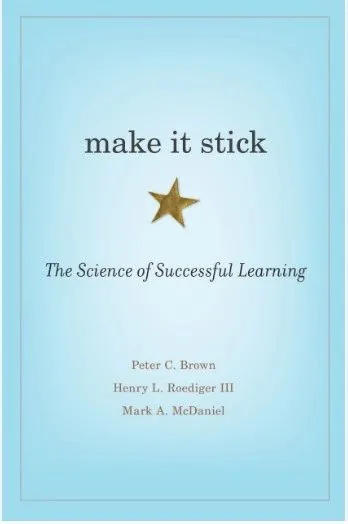
Make It Stick: The Science of Successful Learning by Peter C. Brown, Henry L. Roediger III, and Mark A. McDaniel is a landmark book that offers profound insights into how learning actually works. The book delves into the science behind effective learning strategies, many of which challenge conventional wisdom. When viewed through the lens of the CORE Instructional Design Framework—Concise, Organized, Relevant, and Engaging—these evidence-based strategies can be directly applied to enhance the effectiveness of educational content.
For those unfamiliar with the book, Make It Stick is widely regarded as an evidence-based and essential read for educators, students, and anyone interested in how learning occurs. The authors, who are cognitive psychologists, draw on decades of research to offer practical advice on how to learn more effectively. You can find the book on Amazon here (opens in a new tab).
VISUAL: Make It Stick: Mind Map (opens in a new tab).
Concise: Streamlining Information for Better Retention
One of the key takeaways from Make It Stick is that learning is most effective when it is effortful. The authors argue that strategies like rereading and massed practice (cramming) are not nearly as effective as they might seem. Instead, they advocate for techniques that require more cognitive effort, such as retrieval practice, spaced repetition, and interleaved practice.
Connection to CORE – Concise:
In the context of the CORE framework, the Concise pillar emphasizes delivering content that is clear and focused, without unnecessary fluff. Make It Stick reinforces this by highlighting that too much information presented at once can overwhelm learners, leading to superficial understanding. By streamlining content and focusing on key concepts, educators can reduce cognitive overload and make room for the more effortful, but ultimately more effective, learning strategies that the book champions.
Integrating Counterintuitive Concepts:
While conciseness might seem to favor simplicity, Make It Stick shows that some complexity—when introduced strategically—can enhance learning. The key is to balance concise delivery with techniques that introduce desirable difficulties, such as spaced and interleaved practice. This might feel counterintuitive since adding complexity seems to go against the idea of keeping things simple, but it's about introducing the right kind of complexity at the right time.
Organized: Structuring Learning for Maximum Impact
Make It Stick emphasizes the importance of how information is organized and presented to learners. One of the book’s key principles is the use of interleaved practice, which involves mixing different types of problems or subjects within a single study session rather than focusing on one type at a time. This approach helps students better understand the underlying principles and improves their ability to transfer knowledge to new situations.
Interleaved Practice Explained:
Interleaved practice is the opposite of blocked practice, where a learner focuses on one topic or skill at a time. By mixing topics, students are forced to constantly retrieve different types of information, which strengthens their understanding and retention of the material. This method also helps students see connections between different concepts and encourages flexible thinking.
Connection to CORE – Organized:
The Organized pillar of the CORE framework aligns closely with these principles. It advocates for structuring content in a way that logically guides learners through material, building on prior knowledge and reinforcing connections between concepts. By organizing lessons to include interleaved practice, educators can help students understand each concept individually and see how they relate to one another, thereby deepening their overall understanding and improving long-term retention.
Integrating Counterintuitive Concepts:
Interleaving content might initially seem less organized to both students and instructors because it disrupts the traditional linear flow of teaching one concept at a time. However, this perceived disruption is actually beneficial. It forces students to continuously switch gears, which strengthens their cognitive flexibility and enhances learning. Educators can incorporate this into the Organized pillar by explaining the rationale behind interleaving to students, helping them understand that this method will ultimately improve their mastery of the material.
Relevant: Connecting Learning to Real-World Applications
Make It Stick also discusses the importance of making learning relevant to the learner. When learners can see the practical application of what they’re studying, they are more motivated to engage with the material, and the learning is more likely to stick.
Connection to CORE – Relevant:
The Relevant pillar of the CORE framework ensures that content is directly applicable to students’ needs and real-world experiences. Make It Stick supports this by emphasizing the use of real-world examples, case studies, and scenarios that resonate with students' lives and future careers.
Integrating Counterintuitive Concepts:
Relevance typically involves making content immediately applicable to the student's life or future career. However, Make It Stick suggests that introducing desirable difficulties—challenges that seem to slow learning in the short term but improve retention in the long term—can be more beneficial than constantly tailoring content to what is immediately relevant. By integrating these desirable difficulties within relevant contexts, educators can enhance long-term retention and mastery of the material.
Engaging: Creating a Learning Environment That Captivates and Challenges
Engagement is crucial for effective learning, and Make It Stick offers several strategies to keep students actively involved in the learning process. Techniques like retrieval practice (self-testing), elaboration (explaining what you’ve learned), and reflection (thinking about what you’ve learned and how it applies) are all ways to keep learners engaged.
Connection to CORE – Engaging:
The Engaging pillar of the CORE framework focuses on capturing and maintaining the learner’s interest throughout the educational experience. Make It Stick supports this by showing that engagement is more than just keeping students entertained; it’s about challenging them to think deeply, reflect on what they’ve learned, and apply it in meaningful ways.
Integrating Counterintuitive Concepts:
Traditional methods of engagement often focus on making learning enjoyable and accessible. However, Make It Stick suggests that making learning slightly more difficult—through techniques like retrieval practice and elaboration—can actually enhance engagement and lead to better retention. These strategies might seem counterintuitive because they introduce obstacles, but they work because they require students to engage more deeply with the material. Educators can incorporate these techniques into the Engaging pillar by designing activities that require effortful learning, which will ultimately lead to greater engagement and retention.
Integrating Make It Stick with the CORE Framework
When integrating the insights from Make It Stick into the CORE framework, several key principles emerge:
- Focus on Essential Content: Streamline information to focus on what is most important, leaving room for retrieval practice and spaced repetition.
- Use Interleaved and Varied Practice: Organize content to include mixed practice, which helps students to understand and retain material better.
- Make Learning Relevant: Tie concepts to real-world applications, but don’t shy away from introducing desirable difficulties that might not seem immediately relevant but are crucial for long-term retention.
- Design Challenging and Interactive Activities: Engage students through activities that require effortful retrieval, elaboration, and reflection, leading to deeper learning and better retention.
By aligning Make It Stick with the CORE framework, educators can create instructional designs that are not only effective but also deeply grounded in the science of learning. This alignment ensures that the content is delivered in a way that respects the principles of cognitive psychology while maximizing the educational experience for students.
Enhancing Learning Through CORE and Make It Stick
Make It Stick offers invaluable insights into how learning works and how we can make it more effective. When these insights are applied through the lens of the CORE framework, they provide a powerful approach to instructional design that enhances learning, retention, and application.
Educators who embrace both the principles of Make It Stick and the CORE framework are well-positioned to create learning experiences that are not only engaging and relevant but also deeply effective in helping students achieve long-term success. By focusing on concise, organized, relevant, and engaging content, and by incorporating evidence-based learning strategies, we can ensure that what students learn truly sticks.
For those interested in exploring this evidence-based approach further, you can purchase Make It Stick on Amazon here (opens in a new tab). This book is highly recommended for anyone looking to deepen their understanding of effective learning strategies and how to apply them in educational settings.
For a visual representation of these concepts, check out this Mind Map (opens in a new tab) summarizing the key takeaways from Make It Stick.
Originally published on C.O.R.E Framework.