Understanding by Design (2005, Expanded 2nd Edition)
12 min read
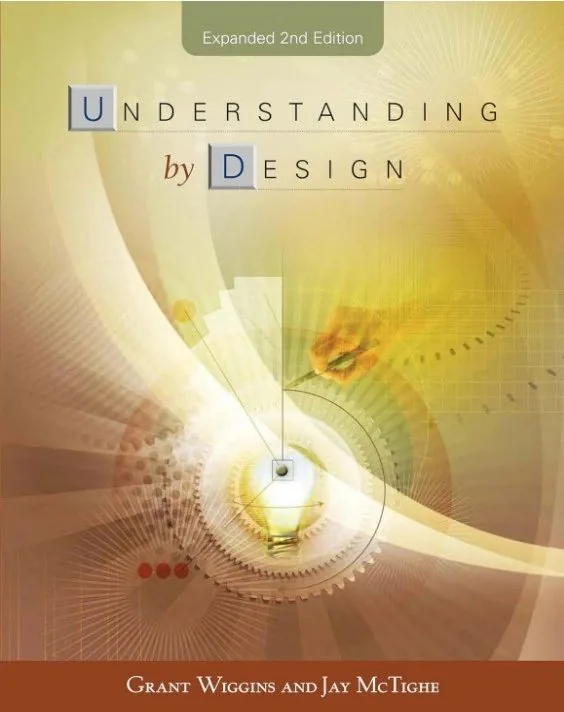
Wiggins and McTighe revolutionized curriculum design by challenging educators to work backward from desired results rather than forward from favored activities and textbook chapters. Their backward design framework, identifying desired understandings, determining assessment evidence, and only then planning instruction, shifts the fundamental question from "What will I teach?" to "What should students understand and be able to do?" The book introduced a practical template and the concept of six facets of understanding that have transformed how educators at all levels approach curriculum planning. Understanding by Design (UbD) treats teaching as design work requiring the same thoughtful client-centeredness found in architecture or engineering, where form follows function and purposes precede methods.
Author Credentials/Background
Grant Wiggins earned his B.A. from St. John's College in Annapolis and his doctorate in education from Harvard University. With 14 years of secondary school teaching experience (English, philosophy, and coaching), he founded Authentic Education and became one of education's most influential reformers. His work shaped Vermont's portfolio system, the Coalition of Essential Schools, and performance assessment prototypes for North Carolina and New Jersey. A Scholar in Residence at the College of New Jersey (2002), Wiggins authored Educative Assessment and Assessing Student Performance, with articles in Educational Leadership and Phi Delta Kappan. His work has been supported by the Pew Charitable Trusts, National Science Foundation, and numerous education organizations.
Jay McTighe brings practical experience from every education level: classroom teacher, resource specialist, program coordinator in Prince George's County, Maryland, and director of the Maryland Assessment Consortium. At the Maryland State Department of Education, he coordinated statewide thinking skills initiatives and directed development of the Instructional Framework multimedia database. He earned his undergraduate degree from William & Mary, master's from University of Maryland, with postgraduate work at Johns Hopkins. McTighe served on the National Assessment Forum and ASCD Publications Committee (chair 1994-95), and co-authored multiple assessment books before partnering with Wiggins on the UbD series.
The Big Idea(s)
Backward Design: Start with the end in mind. Identify desired results (Stage 1), determine acceptable evidence (Stage 2), and only then plan learning experiences (Stage 3). This reverses typical practice where teachers select textbooks and activities first, hoping understanding emerges.
Understanding vs. Knowledge: Understanding is the ability to transfer learning to new situations, to explain, interpret, apply, shift perspective, empathize, and self-assess. Students can know facts yet not understand their meaning. Understanding requires going beyond recall to sophisticated use of knowledge.
The Six Facets of Understanding: Mature understanding manifests in six ways:
- Explanation - providing thorough, supported accounts of phenomena
- Interpretation - making meaningful sense of stories, data, and experiences
- Application - effectively using knowledge in new, realistic contexts
- Perspective - seeing multiple viewpoints and the big picture critically
- Empathy - getting inside others' feelings and worldviews
- Self-Knowledge - recognizing one's ignorance and how patterns of thought shape understanding
Essential Questions: Provocative, arguable questions that spark genuine inquiry and point toward big ideas. They have no single "pat" answer and naturally recur throughout learning. Examples: "What is justice?" "When is war justified?" "What makes writing effective?"
The Twin Sins of Traditional Design: Activity-oriented design (hands-on without minds-on, engaging but intellectually aimless) and coverage-oriented design (marching through textbooks without ensuring understanding). Both lack explicit intellectual priorities.
Assessment Evidence Before Instruction: Think like an assessor before planning lessons. What would count as evidence of understanding? How will students demonstrate transfer? Assessments must align with goals—if understanding is the aim, tests focused solely on recall are invalid.
WHERETO Elements: Effective learning plans ensure students know Where they're headed and Why; get Hooked; are Equipped to explore and Experience key ideas; Rethink and Revise; Evaluate their work; receive Tailored instruction; and encounter well-Organized sequences.
Who Needs This Book
Essential for: Curriculum directors, instructional coaches, department heads, teacher educators, anyone responsible for designing curricula or assessments at any level (K-12 through graduate school)
Highly valuable for:
- Teachers frustrated that students don't retain or transfer learning
- Educators trapped in coverage mode who feel they're teaching but students aren't learning
- Assessment coordinators seeking alignment between goals, instruction, and evaluation
- Leaders implementing standards-based education
- Teachers wanting to escape the "activity trap" to focus on intellectual substance
Useful for: Student teachers, new teachers learning to plan systematically, experienced teachers seeking to refine their practice, homeschooling parents wanting structured curriculum design
If you've ever wondered why students pass tests but can't apply knowledge, or why engaging activities don't produce lasting understanding, this book provides both diagnosis and remedy.
Key Takeaways by Chapter
Introduction & Chapter 1 (Backward Design): Most curriculum design is aimless; either activity-focused (the "apples unit" phenomenon) or coverage-focused (racing through textbooks). Teachers must shift from input thinking (what will I teach?) to output thinking (what will students understand?). The backward design process provides logical structure: first clarify goals, then determine evidence, finally plan instruction. Design standards and templates guide quality control. Example: Bob James, a 6th grade teacher, redesigns his nutrition unit by starting with the understanding that "healthful living requires acting on nutritional information even when breaking comfortable habits" rather than starting with "let's study the food pyramid."
Chapter 2 (Understanding Understanding): Knowledge isn't the same as understanding. Students can memorize facts without grasping their significance (like 8th graders who answered "31 remainder 12" when asked how many 36-seat buses are needed for 1,128 soldiers). Understanding requires the ability to transfer; to use knowledge flexibly in new contexts. It's the difference between a valedictorian who could memorize easily but "understood much less than some other students who cared less about grades."
Chapter 3 (Gaining Clarity on Goals): Unpack standards to identify what's truly essential. Distinguish between what's worth being familiar with, what's important to know and do, and what deserves enduring understanding. Not everything merits deep investigation; sometimes familiarity is sufficient. Content standards imply but don't explicitly state understandings; designers must infer them. The GRASPS framework (Goal, Role, Audience, Situation, Performance, Standards) helps structure authentic tasks.
Chapter 4 (The Six Facets of Understanding): Understanding is multifaceted, like a jewel viewed from different angles. The six facets provide both assessment criteria and instructional goals. Explanation asks students to demonstrate causation and prove claims. Interpretation seeks personal meaning-making. Application tests transfer to authentic contexts. Perspective demands critical examination of assumptions and alternative viewpoints. Empathy requires walking in others' shoes. Self-knowledge involves metacognitive awareness of one's biases and gaps. Units should target multiple facets, not just explanation.
Chapter 5 (Essential Questions): Two types: overarching (timeless, philosophical, "What is justice?") and topical (unit-specific,"Was the American Revolution justified?"). Both should provoke thought, point toward understandings, and recur naturally. Not all important questions are essential; "What is the capital of France?" has a simple answer. Essential questions have no final answer, spark debate, and get at transferable concepts. They frame units and give students intellectual purpose.
Chapter 6 (Crafting Understandings): Write understandings as full-sentence generalizations, not topics. Poor: "Nutrition." Better: "A balanced diet contributes to physical and mental health, but dietary requirements vary by individual." Understandings should be abstract enough to transfer but specific enough to guide assessment. They often counter predictable misconceptions. Distinguish overarching understandings (course-level, transferable across units) from topical ones (unit-specific applications of big ideas).
Chapter 7 (Thinking Like an Assessor): Before planning instruction, determine what evidence would demonstrate understanding. Use a photo album approach—collect varied evidence over time, not just one test. Performance tasks reveal transfer better than selected-response tests. Authentic tasks have real purposes, audiences, constraints, and require judgment. The GRASPS framework structures task design. Balance performance tasks with more efficient quizzes and prompts. Evidence must align with facets targeted—if you want empathy, you must assess it.
Chapter 8 (Criteria and Validity): Assessment without clear criteria is arbitrary. Develop rubrics that reflect the facets of understanding and are visible to students from the start. Valid assessments match desired results—testing recall when you want application is invalid. Reliability matters but shouldn't trump validity. Student self-assessment using criteria develops metacognition. Rubrics should guide learning, not just evaluate it. Avoid vague language like "good" or "adequate"—use descriptors showing what quality looks like.
Chapter 9 (Planning for Learning): Stage 3 planning flows from Stages 1 and 2. Ask: What knowledge and skills must students acquire to perform successfully? What sequence optimizes learning? The WHERETO acronym ensures key elements are addressed. Students need to know Where they're going and Why it matters. Hook them through engaging entry points. Equip them with tools and opportunities to Explore. Provide chances to Rethink and Revise. Build in Evaluation and reflection. Tailor to diverse needs. Organize for maximum engagement and effectiveness.
Chapter 10 (Teaching for Understanding): Move from coverage to "uncoverage"—revealing the ideas hidden beneath facts. Use textbooks as resources, not syllabi. Balance direct instruction with inquiry. Three content types matter: facts (discrete information), concepts (categories and abstractions), and principles/generalizations (the big ideas). The TIMSS studies showed U.S. textbooks state concepts but rarely develop them, unlike high-achieving nations. Check for understanding continuously through multiple techniques (questioning, observation, student explanations) rather than waiting for the unit test.
Chapter 11 (The Design Process): Design is iterative, not linear. Though the logic is Stage 1-2-3, actual design involves back-and-forth refinement. Entry points vary—some designers start with a great task and work backward to identify understandings it assesses. Weekly feedback loops help adjust instruction based on student performance. Use design standards for self-assessment and peer review. Bob James's nutrition unit evolves through multiple revisions as he applies UbD principles, sharpening understandings, improving tasks, and aligning instruction.
Chapter 12 (The Big Picture): Individual units must nest within coherent curriculum frameworks organized around big ideas and recurring essential questions. Design curriculum maps showing how understandings spiral across grade levels. Ensure vertical alignment, concepts introduced in elementary school should deepen through high school. Program-level planning identifies overarching questions that span courses and assessments that occur at strategic intervals. The curriculum framework becomes a macro view where each unit is a micro implementation of overarching goals.
Chapter 13 ("Yes, But..."): Addresses common objections. "I don't have time for understanding, I must cover content." Response: Coverage doesn't equal learning; uncoverage of priorities is more effective. "Standards and testing force coverage." Response: Most standards imply big ideas requiring understanding; tests assess application, not just recall. "My textbook doesn't support this." Response: Use texts as resources to answer essential questions, not as the syllabus. "This works for humanities, not my subject." Response: Every discipline has big ideas, essential questions, and requires transfer. Examples span all subjects and grade levels.
Afterword (Getting Started): Start small, redesign one unit using the template. Work with colleagues to share designs and conduct peer reviews. Use design standards to guide quality control. Expect initial awkwardness; backward design feels unnatural at first but becomes habitual. Join communities of practice (like the online UbD Exchange) to access exemplars and share designs. The goal isn't perfection but continuous improvement toward designs that make understanding more likely by design than by chance.
Questions It Provokes
- How much of my current curriculum is activity-oriented or coverage-oriented rather than results-oriented?
- Can I clearly articulate what I want students to understand (not just know) from each unit I teach?
- If I gave my students an assessment right now, would it validly measure understanding or just recall?
- What predictable misunderstandings do my students harbor, and do I design to address them?
- Are my essential questions truly provocative and arguable, or are they just topical questions with pat answers?
- How would my teaching change if I thought like an assessor before planning lessons?
- Do my students know where they're headed and why, or are they just following instructions?
- Which of the six facets do I emphasize most, and which do I neglect?
- Am I teaching for transfer, or am I hoping students will somehow figure out how to apply knowledge on their own?
- What would it mean to truly "uncover" rather than "cover" my curriculum?
- How can I balance the pressure to cover content with the need for students to deeply understand key ideas?
Recommendation Strength
ESSENTIAL for anyone involved in curriculum design, instructional leadership, or teacher education. This is the most influential practical framework for curriculum planning in the past 25 years. The UbD template has been adopted by thousands of schools and districts worldwide and is required reading in many education programs.
Strengths: The backward design logic is impeccable and immediately applicable. The template provides concrete structure without being prescriptive about content. The six facets offer a sophisticated yet accessible conception of understanding. Examples span all subjects and grade levels (elementary through college). The writing balances theory with practical application. Design standards enable quality control. The framework respects teacher professionalism while providing needed structure.
Cautions: The book is dense and requires careful reading; skim it and you'll miss crucial nuances. Initial implementation feels awkward and time-consuming; the payoff comes with practice. Some educators misunderstand backward design as anti-content or anti-direct instruction (it's neither). The template can be misused mechanically if designers lose sight of the underlying principles. Elementary teachers may initially struggle with examples skewed toward secondary (though the expanded 2nd edition addresses this). The emphasis on performance assessment doesn't diminish the value of efficient quizzes and tests when appropriate.
Time investment: Plan to spend significant time on initial reads and first redesign attempts. A single unit redesign might take 10-20 hours initially. However, the framework becomes internalized, making subsequent designs faster and more effective. Many teachers report that their students learn more with less wasted time.
For whom it's transformative: Teachers who feel they're teaching but students aren't learning; curriculum directors seeking coherence across a program; anyone frustrated by the coverage trap; educators implementing standards who need alignment between goals, assessment, and instruction.
The ideas are genuinely revolutionary in practice if not in theory. Tyler articulated backward design in 1949, but Wiggins and McTighe made it actionable through templates, design standards, and comprehensive examples. Read this book to work smarter, not harder, and to make student understanding likely by design.
Related Resources
By the Same Authors:
- Understanding by Design Professional Development Workbook (McTighe & Wiggins, 2004): Essential companion with design tools, exercises, and worksheets
- The Understanding by Design Guide series: Subject-specific applications (science, mathematics, language arts)
- Online: UbD Exchange (ubdexchange.org) - database of exemplar units worldwide
Aligned Frameworks:
- Teaching for Understanding (Wiske, 1998): Harvard's Project Zero work on teaching for understanding
- How People Learn (Bransford, Brown, & Cocking, 2000): National Research Council synthesis supporting UbD principles
- Visible Learning (Hattie, 2009): Research on effective instructional strategies complementing UbD design
Assessment Focus:
- Classroom Assessment for Student Learning (Stiggins et al., 2004): Formative assessment principles aligning with UbD
- Embedded Formative Assessment (Wiliam, 2011): Practical techniques for ongoing assessment
Curriculum Design:
- Concept-Based Curriculum and Instruction (Erickson, 2007): Complementary approach to organizing curriculum around big ideas
- The Skillful Teacher (Saphier & Gower, 1997): Instructional strategies compatible with UbD planning
Foundational Theory:
- The Logic of Scientific Discovery (Popper, 1959): On transfer and application as understanding
- Taxonomy of Educational Objectives (Bloom, 1956): The foundation for distinguishing knowledge from understanding
- Basic Principles of Curriculum and Instruction (Tyler, 1949): The original articulation of beginning with desired results
Impact: Understanding by Design transformed curriculum design from an art (dependent on individual teacher talent) to a disciplined practice (systematic yet creative). It provided education with what medicine has in evidence-based practice, a framework grounding professional decisions in clear principles while respecting practitioner expertise. The UbD template is now standard in curriculum courses, professional development, and textbook design. Perhaps most significantly, it gave educators permission to say "no" to coverage in favor of understanding, armed with a coherent rationale and practical alternative.
Originally published on C.O.R.E Framework.